
Busan isn’t a one-season city. It’s a beach town, a mountain-hiking destination, a film festival hub, and a peaceful winter escape, all rolled into one — and each season changes what the city has to offer. Sitting on Korea’s southeastern coast, Busan has a mild, humid climate that produces four genuinely distinct seasons, each with its own weather, crowds, and reasons to visit. So when exactly is the best time to visit Busan? Here’s a season-by-season breakdown to help you figure out when to go.
Best Time to Visit Busan, Month by Month
If you only need the short version, here is the whole year at a glance. Each month is unpacked in the season sections below.
| Month | Weather | What’s on | Crowds |
|---|---|---|---|
| January | Highs around 9°C, nights near freezing | Peak seafood season | Lowest |
| February | Cold, sharp coastal wind | Quiet city, low prices | Lowest |
| March | Low teens | Cherry blossoms from the last week | Rising |
| April | Mild and comfortable | Cherry blossom peak, Jinhae Gunhangje | High on festival weekends |
| May | Low twenties | Best weather before the rain | Moderate |
| June | Warm, humidity building | Beaches open | Moderate |
| July | Wettest month of the year | Beach season, night markets | High |
| August | Averaging 27°C, highs past 30°C | Full beach season | Highest |
| September | Warm, easing off | Beaches still open, crowds thinning | Easing |
| October | Low-to-mid twenties, clear | Busan International Film Festival | Peak |
| November | Cool, autumn foliage | Busan Fireworks Festival, Gwangalli | High in early November |
| December | Cold and dry | Seafood season, lowest prices | Lowest |
Spring (March–May): Cherry Blossoms and Comfortable Weather
Spring is when Busan wakes back up after winter. Daytime highs climb from the low teens in March to the low twenties (°C) by May, and the humidity that defines Busan summers hasn’t shown up yet.
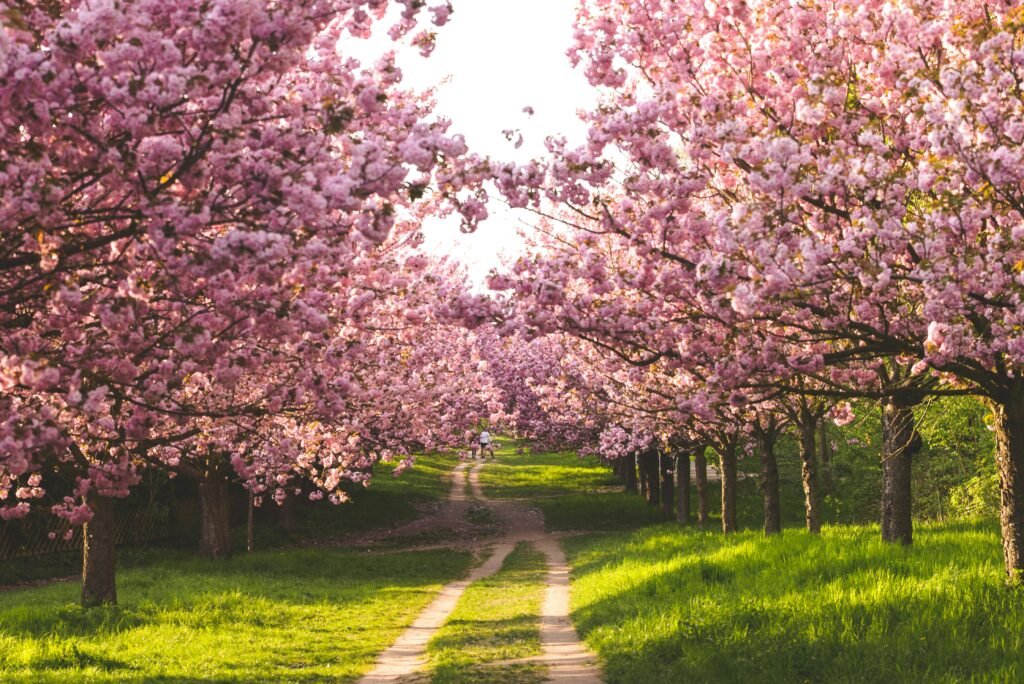
The main draw is cherry blossom season, which typically arrives in Busan in the last week of March and peaks about a week later — among the earliest blooms in the country, since Busan sits so far south. Local spots like Dalmaji Hill in Haeundae and the walking paths along Oncheoncheon Stream fill with blossoms, but the real pilgrimage is a short trip to nearby Jinhae for the Jinhae Gunhangje Festival, one of Korea’s largest cherry blossom celebrations, about 45–60 minutes from Busan by bus or train.
Good to know : Hotel prices spike around the Jinhae festival weekend, so book early if your trip lines up with peak bloom. Outside that one weekend, spring is otherwise a great-value season, with comfortable weather and noticeably thinner crowds than summer or October.
Summer (June–August): Beach Season, With a Catch
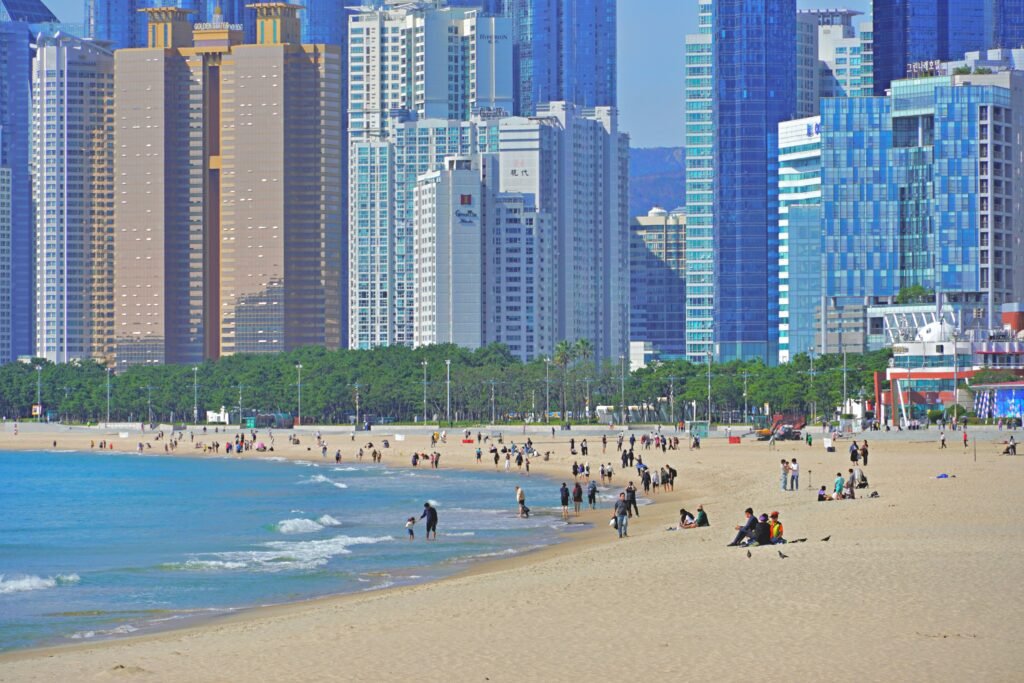
Summer is when Busan’s identity as a beach city really shows up. Haeundae and Gwangalli beaches move into full swing, sea temperatures reach a very swimmable 27°C (81°F) by August, and the boardwalks fill with festivals, night markets, and outdoor concerts.
The catch is the weather itself. June and July bring Korea’s monsoon season (jangma), and July is typically the wettest month of the year in Busan, with an average of around 300mm of rain. Humidity climbs right alongside the heat, and by August, daytime highs regularly push past 30°C (86°F).
Good to know: If the beach is your main goal, aim for August rather than late June or July, and pack for heat and humidity rather than rain. Hotel prices in Haeundae peak during this stretch too, so book well ahead.
Autumn (September–November): The Best All-Around Season
If there’s one season most travel guides quietly agree on, it’s this one. September eases out of summer’s humidity, and by October, Busan settles into arguably its most comfortable stretch of the year — sunny days, mild highs in the low-to-mid twenties (°C), and clear air that makes the coastline and mountain trails look their best. For most visitors, this is the best time to travel to Busan.
October is also festival season. The Busan International Film Festival (BIFF), one of Asia’s largest and most prestigious film festivals, usually runs for about ten days in early October (dates are announced each spring), drawing filmmakers and fans from all over the world along with a genuinely festive citywide atmosphere.
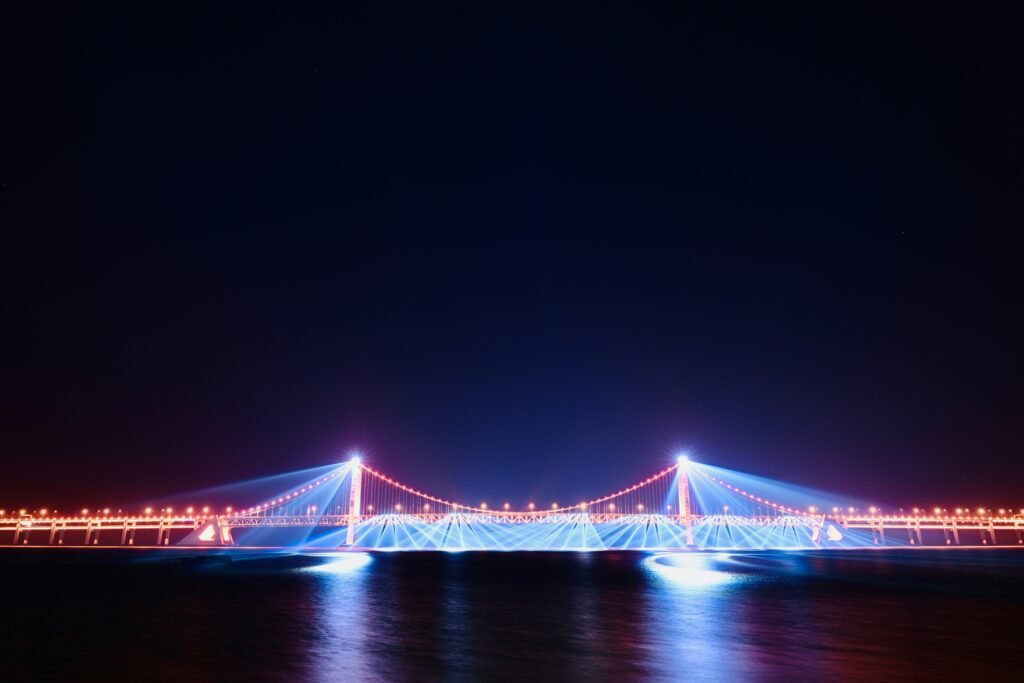
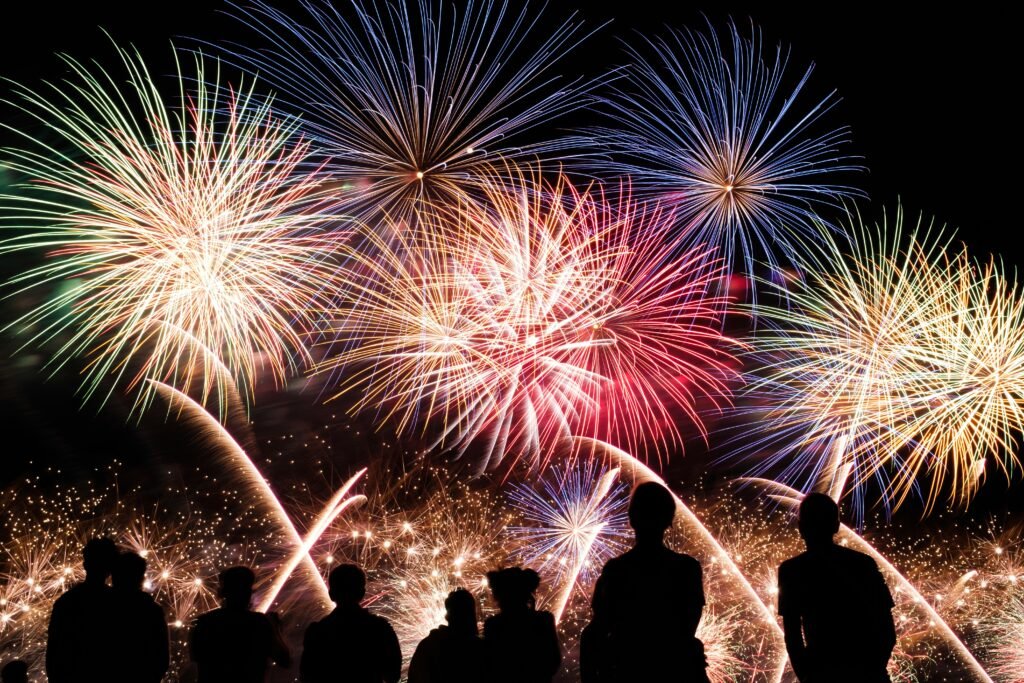
In November, the season closes out with the Busan Fireworks Festival at Gwangalli Beach — one of Korea’s largest fireworks displays, drawing well over a million spectators for a show staged against the Gwangan Bridge (usually held in early November ). Late autumn also brings foliage season to Busan’s temples and mountain parks, a quieter but equally rewarding reason to visit.
Good to know: Because of BIFF and the fireworks festival, October and early November count as Busan’s second high season after summer — book accommodations near Haeundae or Gwangalli well in advance if your trip overlaps with either event.
Winter (December–February): Quiet Streets, Lower Prices
Winter is Busan’s off-season, and that’s exactly its appeal. January is the coldest month, with daytime highs around 9°C (48°F) and nights dipping close to freezing, but Busan’s coastal location means it rarely sees the heavy snow that piles up in Seoul — most winter days are cold but clear and sunny.
With far fewer tourists around, hotel prices drop, and popular spots like Gamcheon Culture Village and Jagalchi Market are easy to explore without fighting crowds. It’s also peak season for some of Busan’s best seafood, since colder water tends to mean firmer, better-tasting hoe (Korean-style sashimi) at Jagalchi Market — and a great excuse to warm up afterward in one of Haeundae’s hot spring spas.
Good to know: Winter is the best time to visit if your priority is budget travel, short lines, and a slower pace — just pack real layers, since the coastal wind makes the cold feel sharper than the number on the thermometer suggests.
Quick Answer: When Should You Go?
- Want cherry blossoms and mild weather? Late March to early April.
- Want the beach? August — just expect heat, humidity, and crowds.
- Want the best overall balance of weather, festivals, and comfort? October is Busan’s sweet spot.
- Want low prices and short lines? December to February.
There’s no single wrong time to visit Busan — the city has something worth planning around in every season. But if you can only pick one, October’s mix of mild weather, clear skies, and festival energy is hard to beat.
Before You Go
Busan is easy to get around once you can read the signs. The subway runs to almost everywhere in this guide, and our walkthrough of how to use the Korean subway covers the ticket machines, the transfer signs and the station names you will actually need.
You do not need much Korean to enjoy Busan, but a handful of phrases changes the trip. Start with 10 essential Korean phrases for travelers, then read how to order food in Korean before your first meal at a seafood market — Jagalchi is not a picture-menu kind of place.
Busan is also a market city, and markets have their own rules. At Gukje Market or the stalls around Jagalchi, the sticker price is an opening position and haggling is expected — but try the same thing in a department store in Seomyeon and it lands badly. Our guide to shopping in Korean covers both, including the questions cashiers ask you at the till.
One practical note on timing: Korean restaurants often close between roughly 3 and 5 PM, and the sign on the door is the only place it is written. Our guide to telling time in Korean explains 영업시간, 브레이크 타임 and 휴무일 so you are not standing outside a dark restaurant at 4 PM.
And if the trip has you thinking about learning the language properly, our complete beginner’s roadmap lays out the whole first year.
Leave a Reply